
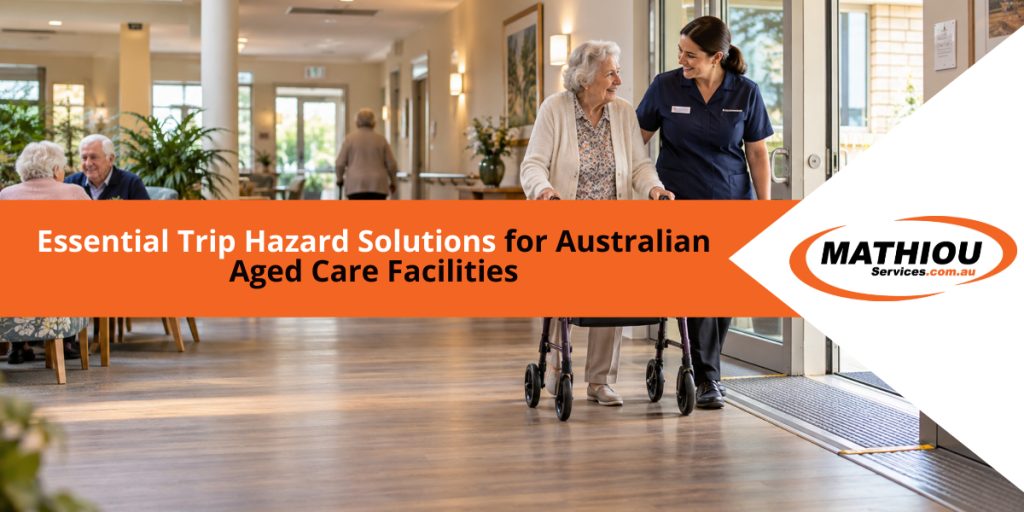
A simple five millimetre lip on a doorway doesn’t look like much. To an elderly resident using a walker, that tiny ridge is a mountain.
Falls in Australian aged care facilities account for a massive chunk of hospital admissions every year. Fixing trip hazards goes far beyond ticking basic compliance boxes. It gives older Australians the confidence to move freely and maintain their independence. Fear of falling often keeps residents confined to their rooms. When a building feels safe, the people inside it thrive. Let’s look at practical, proven ways to remove these hidden dangers across your facility.
Eliminating Indoor Threshold Traps
Transitions between different rooms are notorious danger zones. Moving from plush hallway carpet to smooth bathroom vinyl creates an unexpected change in underfoot friction. Footwear catches. Balance shifts quickly.
Install low profile transition strips anywhere floor types change. Colour contrast plays a massive role here. A silver aluminium strip on grey carpet is practically invisible to someone managing cataracts or macular degeneration. Use high contrast materials to clearly mark where one floor type ends and another begins.
Secure loose rugs permanently or remove them completely. Double sided tape simply fails in high traffic corridors where meal trolleys and heavy wheelchairs roll through daily. If a rug corners start to curl, it needs to go immediately.
Taming the Great Outdoors
Stepping outside brings a whole new set of environmental risks. Tree roots grow aggressively underneath paths. Heavy rains wash away supporting topsoil. Suddenly, a perfectly flat courtyard becomes a dangerous obstacle course of sunken pavers and lifted bricks.
Patch jobs rarely last long in the harsh Australian climate. Replacing a few loose stones might look okay for a month. Then the ground shifts again. Facility managers get far better long term results by calling in professional concreting services to pour seamless, level pathways. A continuous solid surface eliminates the micro trips caused by shifting individual pavers.
Adding a light broom finish to the surface creates instant slip resistance. That rough texture provides crucial grip even after a sudden Queensland summer downpour.
Designing Safe and Engaging Courtyards
Aged care residents need fresh air and sunshine for their physical and mental health. But the garden environment must be effortlessly easy to navigate. When brainstorming new landscaping ideas, focus heavily on functional accessibility over complex aesthetics.
Avoid loose materials entirely. Decorative pebbles, gravel and uncompacted bark mulch look great in a lifestyle magazine. In reality, walking frames and wheelchairs bog down in these soft surfaces instantly.
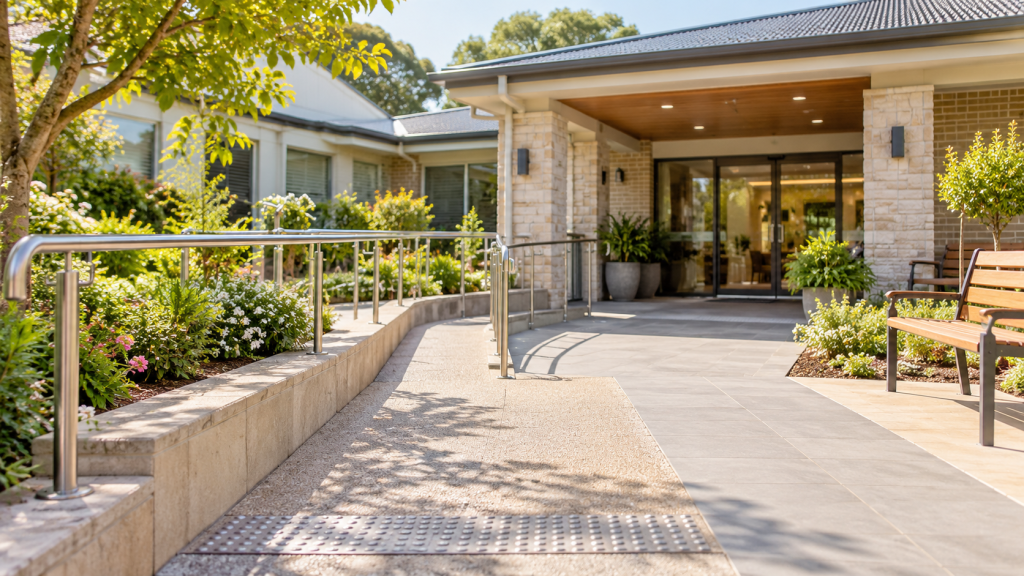
Keep garden beds raised to waist height. This clever design stops loose soil from spilling onto footpaths and allows residents to interact with plants without dangerous bending. Every outdoor space in modern senior living accommodation must prioritise clear, wide pathways featuring gentle gradients instead of stairs.
The Lighting Factor
Trip hazards aren’t always physical objects sitting on the floor. Sometimes they are pure optical illusions. Poor lighting creates deep, sharp shadows that look exactly like steps or holes to aging eyes. A resident might try to step over a shadow, lose their balance, and fall on a perfectly flat floor.
Glare is equally dangerous. Blazing afternoon sun bouncing off polished vinyl causes residents to freeze in their tracks. They physically cannot tell if the floor is wet or just highly polished.
Swap out harsh overhead fluorescents for diffused LED lighting. Ensure pathways have consistent, even illumination from start to finish. Aim for uniform lux levels across entire corridors. Motion sensor lights in private bathrooms provide immediate visibility during late night trips. This simple upgrade removes the panic of fumbling for a switch in the dark.
Furniture Placement and Clutter Control
Common areas get cluttered incredibly quickly. Visitors move chairs. Tea trolleys sit idle in hallways. Cleaners leave warning signs out longer than necessary. A space that looked perfect on an architect’s floor plan quickly becomes a maze in everyday real life.
Keep thoroughfares strictly clear. A main walking path needs to be wide enough for two mobility aids to pass each other comfortably without anyone reversing. Pick lounge furniture with sturdy armrests to help residents stand up safely. Ensure the chair legs do not stick out further than the seat cushion itself. A wooden leg protruding into a walkway guarantees a stubbed toe or a nasty tumble.
Regular Hazard Audits
A safe building today might not be safe next month. Foundations settle. Wear and tear happens rapidly in twenty four hour environments.
Schedule strict monthly audits specifically hunting for emerging trip hazards. Look closely for frayed carpet edges near dining areas. Test every single hallway handrail for wobbles. Check the outdoor ramps for slippery moss buildup during the wetter winter months. Catching a tiny maintenance issue early prevents a catastrophic emergency later.
Upgrade Your Facility Standards Today
Maintaining a flawless, hazard free environment takes constant vigilance and the right trade expertise. Mathiou Services delivers comprehensive property maintenance, building solutions and custom safety upgrades tailored specifically for the Australian aged care sector. Need to fix uneven pathways, upgrade facility lighting or eliminate dangerous flooring transitions? Contact us today for a tailored, compliant solution that keeps residents safe, mobile, and confident.