
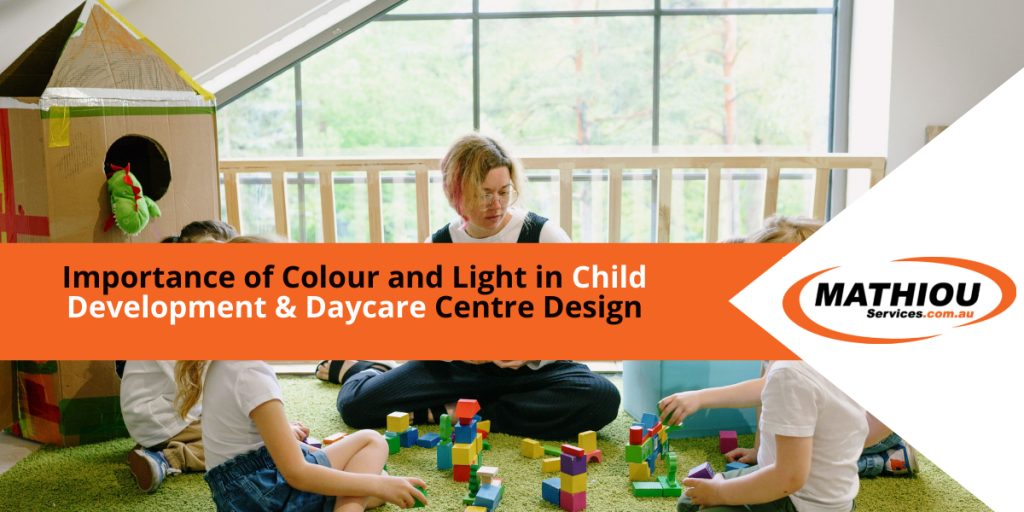
Creating environments where children feel safe, curious, and inspired is at the heart of every successful early learning space. A meticulously planned and built daycare space with intentional light & colour design will play an important role in stimulating children’s brain development and experience. With that in mind, daycare centres should be shaped by thoughtful planning, evidence-based choices, and a deep understanding of how children grow and learn in an effective & conscious lighting and colour design layout.
Let’s discover creative and functional daycare centre & floor layout design that best encourages children’s growth and development with Mathiou Services’s architects.
Why Colour Matters in Childcare Design
Young children experience the world in a highly sensory way. Before they can fully express emotions, they respond to what they see around them and colours are the most vibrant and eye-catching elements to consider when it comes to daycare centre setup.
According to a child psychology study, putting on soft, warm tones in surroundings like wall paints or furniture can create a sense of calm and security, helping children settle into routines and feel comfortable in new environments. On the other hand, brighter colours like red or yellow can be used strategically to stimulate creativity and encourage active play.
The key in effective childcare colour designs is the balance of tones and colours. Overly bright or clashing colours can lead to overstimulation to the child’s vision, while overly neutral environments may feel dull and uninspiring in a learning space. A layered approach works best, combining calming base tones with intentional accents that guide behaviour and engagement.
Using Colour to Support Learning and Movement
When designing a childcare centre, colour can do more than just decorate, it can navigate how children interact with the space effectively.
With different purposes and a variety of activities, different zones in the daycare centre can be defined through colour to support the children’s growth better. Quiet areas for reading or resting should be covered with softer palettes, while play areas can incorporate more energetic and vibrant tones to stimulate enthusiasm better. This approach not only supports behaviour but also improves navigation within a daycare centre layout for children’s effective development.
A thoughtful colour-coded space can help children build independence by making it easier for them to recognise and remember different areas of the centre without constant direction.
The Role of Natural Light in Daycare Design
Beside colours, lighting plays a critical role in shaping how a daycare space feels and functions. Natural light, in particular, is essential in any well-planned daycare design.
Instead of fluorite lights that provide constant and stable light sources, incorporating natural light into childcare’s setup supports healthy sleep patterns, improves mood, and enhances concentration effortlessly. Spaces filled with daylight feel more open and welcoming, which is especially important in early learning environments where children benefit from a connection to the outdoors.
However, effective design isn’t just about maximising sunlight, it’s about allowing & controlling it. Glare, harsh brightness, and uneven lighting can cause discomfort and distraction. That’s why daycare centre design requirements in lighting design should be carefully considered, from window placement, shading solutions, to how light moves through the space throughout the day.
Designing with Artificial Lighting in Mind
In addition to natural light, artificial lighting plays a key role in daycare layout design with appropriate setup to assist children’s learning experience effectively.
With an expertly layered lighting approach, combining ambient, task, and accent lighting, incorporating artificial lighting into the learning space allows educators & learners to adapt the environment. For example, bright lighting can support focused learning and group activities, while softer lighting helps create a calm atmosphere for rest and quiet time.
Flexibility is essential. Consider working with a professional daycare architect who is qualified and experienced in designing a natural & supportive learning space to ensure that the space can evolve throughout the day to match children’s needs and routines.
Supporting Development Through Thoughtful Design
Colour and light are not just aesthetic choices, they directly influence cognitive and emotional development when combined and used effectively.
In well-planned childcare designs, these elements are used to encourage exploration, independence, and social interaction. For example, light can naturally draw attention to activity zones, while colour can define boundaries without the need for physical barriers. These two essential elements require a balance between to assist children’s learning and development effectively.
These subtle design decisions help create environments that feel structured yet flexible, allowing children to explore safely while remaining within supervised areas.
Balancing Creativity with Compliance
While design plays a major role in shaping experience, it must always align with safety and regulatory standards.
Day care centre design requirements include considerations such as visibility for supervision, safe material selection, and appropriate lighting levels. Colour choices must also work alongside durable, non-toxic finishes that can withstand daily use.
This is where professional expertise becomes essential, ensuring that every aspect of the daycare center setup ideas not only looks good but functions safely and effectively.
Creating Better Spaces with Expert Childcare Design
Great daycare design goes beyond compliance. It creates environments where children feel confident, engaged, and ready to learn every day. As expectations for early learning spaces continue to evolve, investing in thoughtful childcare design is one of the most impactful decisions you can make, for both your centre and the children it supports. Contact the Mathiou Services team to help yourself with questions and consultation about daycare design and setup.